
Setting Up a Home Studio in a Small Room
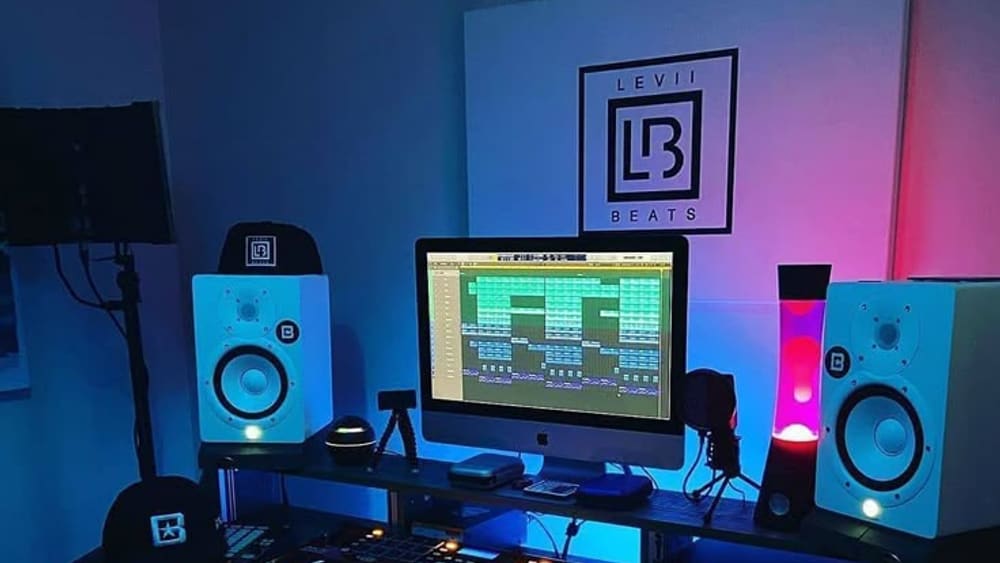
Plenty of records that you know were made in bedrooms. The gap between a bedroom recording that sounds amateur and one that sounds professional is mostly about the room and the decisions, not the price of the equipment.
Buy in this order
If money is limited — and it usually is — this order gets you the most improvement per shilling:
- Audio interface. The box that connects microphones and instruments to your computer. Two inputs is enough to start.
- One good microphone. One decent microphone beats three cheap ones.
- Headphones. Closed-back for recording, so the sound does not leak into the microphone.
- Stand, cable, pop filter. Unglamorous, essential.
- Acoustic treatment. More on this below — it is the step people skip and should not.
- Studio monitors. Last, because they are useless until the room is treated.
The room is your biggest problem
A small room with parallel walls, a hard floor and a flat ceiling is acoustically hostile. Sound bounces between the surfaces and returns to the microphone a few milliseconds late, which is what makes home recordings sound boxy and distant.
The good news is that treating a small room is cheap:
- Break up the reflections. A bookshelf full of unevenly sized books on one wall scatters sound very effectively.
- Soften the first reflection points. Heavy curtains, a duvet on a stand, or purpose-made foam panels at the points where sound bounces from speaker to ear.
- Do not record in the middle of the room, and do not face a bare wall a metre away.
- Carpet or a rug kills floor reflections for almost nothing.
Foam on every wall is not the goal. A room with no reflections at all sounds dead and unpleasant. You are aiming to tame the worst of it, not eliminate it.
Condenser or dynamic microphone?
Condenser microphones are more sensitive and capture more detail — and more of the room. In an untreated space, that is not always a good thing.
Dynamic microphones are less sensitive, reject more of what is behind and around them, and are more forgiving in a difficult room. For vocals in an untreated bedroom, a good dynamic microphone often gives a cleaner result than a condenser twice the price.
If your room is noisy — traffic on the road outside, corrugated roofing in the rain — a dynamic microphone will save you far more grief than any plugin.
Headphones before monitors
Studio monitors in an untreated small room will lie to you. The bass will be exaggerated or missing depending on where you sit, and mixes made on them will not translate to other systems.
Start with a decent pair of closed-back headphones for recording and open-back for mixing if you can stretch to both. Add monitors once the room has been treated, not before.
Power and noise
Two practical Kenyan realities worth planning for:
- Mains noise. A cheap power supply can put an audible hum into every recording. Use a surge protector, and keep audio cables away from power cables.
- Ambient noise. Record at quieter times of day where you can. No microphone technique removes a matatu hooting outside your window.
What you can skip at the start
You do not need: a mixing desk, outboard compressors, more than two microphones, a MIDI controller with eighty-eight keys, or the most expensive interface on the shelf. Those are upgrades for when a specific limitation is stopping you — not day-one purchases.
Come and tell us what you are recording
The right first purchase is different for a rapper, a gospel vocalist, a podcaster and a guitarist. Tell us what you intend to record and roughly what you can spend, and we will put together a starting setup that leaves room to grow. Come to the shop and hear the difference between two microphones before you choose.
More guides
How to Choose a PA System for Your Church
Room size, ceiling height and how many people speak at once matter more than watts. A practical guide to sizing a church sound system in Kenya without overspending.
Buying Your First Acoustic Guitar: What Actually Matters
Playability beats looks every time. What to check before you hand over money for a first guitar, and the difference between a cheap guitar and a bad one.
Wireless Microphones: What Actually Matters
UHF versus VHF, why cheap wireless drops out mid-sermon, and how many systems you can safely run in one room. Practical advice for churches, schools and event companies.